[email protected]
 Monday to Friday 8 a.m.- 5 p.m.
Call Us +86-13968655659
[email protected] Monday to Friday 8 a.m.- 5 p.m.Industry News
 2026.07.10
 Industry News
Progressive stamping press is increasingly used in factories where production schedules change frequently and multiple metal components are manufactured within the same shift. Instead of focusing only on stroke speed, many production managers now pay close attention to how quickly equipment can move from one job to the next without interrupting output.
As manufacturers pursue shorter delivery times, discussions around the progressive stamping press often include another important term—metal stamping press. While both are associated with sheet metal production, engineers are becoming more interested in how efficiently the entire production process flows rather than simply comparing machine specifications.
Production Changes More Often Than Before
Many factories no longer receive large orders for a single component.
Instead, production schedules are divided into smaller batches.
One motor core may be completed in the morning.
Another specification follows after lunch.
By the afternoon, tooling may already be prepared for a different customer.
This frequent switching has made setup time far more noticeable than it was several years ago.
A progressive stamping press that allows production teams to return to stable operation quickly often creates more value than one designed only for running speed.
Time Is Often Lost Between Orders
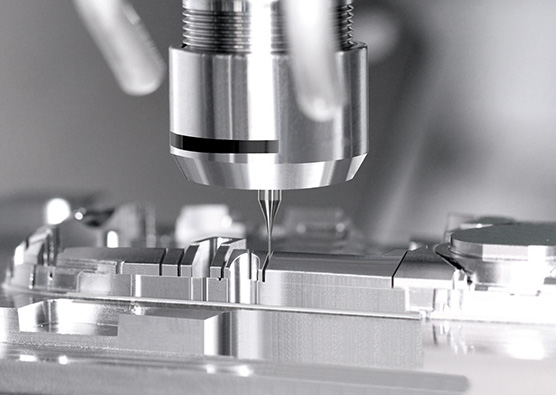
Managers reviewing production reports sometimes discover an interesting pattern.
The press itself is rarely idle because of mechanical failure.
Instead, time disappears during preparation.
Material loading.
Tool replacement.
Trial stamping.
Dimension checking.
Each task may only take several minutes, but together they reduce available production time.
Because of this, many workshops evaluate a metal stamping press by how smoothly it moves into the next production cycle rather than by peak operating speed alone.
Experienced Operators Follow A Routine
Visitors usually notice the machine first.
Operators notice the preparation.
Before the stamped part appears, they confirm tooling position, strip alignment, lubrication, and feeding conditions.
These checks have become routine because small adjustments at the beginning often prevent much larger interruptions later.
In daily production, the progressive stamping press is appreciated not only for maintaining output but also for allowing experienced teams to establish a predictable workflow before mass production begins.
Stable Changeovers Support Long Production Days
Some factories perform only one setup each day.
Others complete several.
In facilities handling mixed customer orders, changeovers become part of normal production instead of exceptional events.
Engineers therefore pay attention to whether the next tooling installation progresses smoothly without repeated corrections.
The overall experience of using a metal stamping press is increasingly judged by these transition periods, where preparation quality directly influences the efficiency of the following production run.
Consistency Matters More Than Maximum Speed
Manufacturers continue to pursue higher productivity, but many now describe efficiency differently.
Running quickly for one hour is valuable.
Running smoothly throughout an entire shift is often more important.
A progressive stamping press that delivers repeatable performance across different tooling setups helps reduce unnecessary inspection, improves scheduling confidence, and allows operators to maintain a steady production rhythm.
Rather than measuring success by a single production record, factories increasingly evaluate long-term consistency across hundreds of ordinary working days.
Better Preparation Often Creates Better Output
Successful stamping rarely begins with the stroke.
It begins during preparation.
Tool inspection.
Material verification.
Equipment adjustment.
Operator coordination.
When these activities are completed carefully, both the progressive stamping press and the metal stamping press can return to production with fewer interruptions and more predictable results.
Across today's manufacturing industry, reducing setup time has become less about working faster and more about helping every production run start smoothly from the very beginning.
Recommended Products


Sale Precision Stamping Mold Company


 English
 Español
 русский