[email protected]
 Monday to Friday 8 a.m.- 5 p.m.
Call Us +86-13968655659
[email protected] Monday to Friday 8 a.m.- 5 p.m.Industry News
 2026.05.29
 Industry News
Finding the right tooling partner is not easy. Walk into any stamping shop, and you will hear stories of dies that wore out too fast, cracked under pressure, or never held tolerance from the start. That is why selecting among progressive stamping die manufacturers requires more than a quick price comparison. This article walks through what actually matters when evaluating suppliers.
A supplier who has built hundreds of progressive dies sees problems before they happen. Newer shops might struggle with strip layout, pilot placement, or balancing cutting forces. Experienced progressive stamping die manufacturers know how different materials behave under high-speed conditions.
Ask for past project examples. A supplier focused on motor core tooling understands thin electrical steel and tight magnetic gap requirements. Another shop may specialize in automotive brackets using thicker, high-strength steels. Neither is bad, but their experience shapes how they design your die.
Factories with long track records also tend to have stable quality systems. They check dimensions at multiple stages. They document heat treatment batches. They test dies on actual presses before shipping. These small habits separate reliable progressive stamping die manufacturers from the rest.
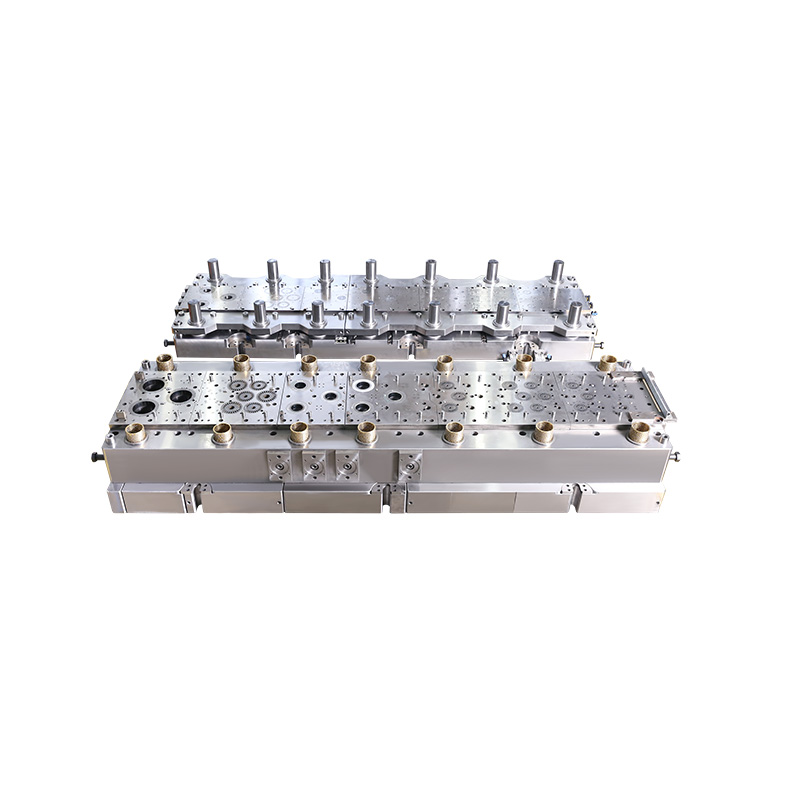
Progressive stamping lives or dies by accuracy. A die that cannot hold position across fifty stations will fill your scrap bin fast. Good progressive stamping die manufacturers invest in precision equipment: CNC grinders, wire EDM, and coordinate measuring machines.
But equipment alone is not enough. Ask how they control tolerance stack-up across long progressive dies. Some shops measure every station individually. Others rely on primary article inspection only. The better approach catches drift before it becomes a reject.
For industries like electric motors or medical devices, even micron-level errors matter. A progressive stamping die that holds consistent clearance reduces burrs, improves stacking, and lowers assembly rejects. During supplier visits, ask to see their inspection records from recent jobs.
Many dies work fine at slow speeds but fall apart when the press runs fast. Vibration, strip wobble, and heat buildup all increase with stroke rate. Experienced progressive stamping die manufacturers design around these issues.
Look for details like balanced cutting forces, adequate pilot hole spacing, and proper die shut height. Some suppliers use finite element analysis to check stress points before building. Others rely on experience-based rules. Both can work, but the primary approach handles new or unusual parts better.
Ask potential progressive stamping die manufacturers about their higher-level recommended operating speed for your specific part geometry and material. A straight answer shows they have thought about your real production environment, not just the die itself.
Tool steel quality directly affects die life. Cheap steel cracks. Poor heat treatment leads to edge wear in days instead of years. Professional progressive stamping die manufacturers specify grades like D2, M2, or powder metallurgy alloys based on your application.
Heat treatment matters just as much. Air hardening, vacuum processing, and cryogenic treatments all produce different results. Ask to see the hardness test reports. A reliable supplier tracks every batch.
Cutting inserts for high-wear stations can extend die life significantly. Some progressive stamping die manufacturers add carbide sections where needed. Others use coated punches. These upgrades cost more upfront but reduce maintenance frequency on long runs.
The die delivery is not the end of the relationship. Production issues come up. Materials change. Press conditions vary. Good progressive stamping die manufacturers offer after-sales support without endless email chains.
Ask how they handle regrinding recommendations. Do they provide setup sheets? What about spare part lists for wear components? Suppliers who answer these questions clearly save you time later.
Communication during design matters too. A progressive stamping die might look correct on paper but cause strip lifting or poor scrap shedding in real operation. Experienced suppliers catch these issues during design reviews. They ask the right questions about your press, feeder, and lubrication system before cutting steel.
Not every progressive die needs the same features. Thin material requires tight guide clearances and low strip lift. Thick metal needs stronger pilots and heavier die sections. Strong progressive stamping die manufacturers adapt to your specific job.
Customization also covers part complexity. Some shops excel at simple blanking dies. Others handle forming, drawing, and coining in one progressive strip. Match the supplier's strength to your product needs.
For companies launching new products, flexible progressive stamping die manufacturers offer design feedback early. They might suggest adding pilot holes in unused areas or changing feature orientation for better strip stability. Small suggestions like these improve real-world performance significantly.
The cheap die rarely stays cheap. Early wear forces regrinds. Poor strip stability creates rejects. Missing technical support leaves you troubleshooting alone. Reliable progressive stamping die manufacturers charge fair prices but deliver lower overall operating costs.
Look for partners willing to review your annual volume, material batches, and press schedule. A supplier who asks about your five-year production plan thinks long term. That is the kind of progressive stamping die manufacturers that help you grow without constantly retooling.
In the end, choosing well means asking hard questions about experience, precision, speed, materials, support, flexibility, and total cost. The right partner makes your stamping line run smoother. The wrong one creates problems every shift. Take the time to compare carefully.
Recommended Products


Sale Precision Stamping Mold Company


 English
 Español
 русский